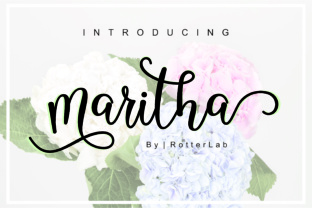
Maritha Script: A Modern Typeface for Elegant, Handcrafted Designs
There’s a particular kind of design challenge that calls for more than just clean lines and standard letterforms. You’re working on a wedding invitation suite, a boutique product label, or the logo for a creative studio, and the default serif font or sans serif font just won’t convey the personal, artistic touch you’re aiming for. This is where a thoughtfully crafted script font enters the picture, not as a mere decoration, but as a foundational element that carries personality. Maritha Script is a premium font designed to meet this need, offering a blend of contemporary style and organic, hand-drawn character that feels both fresh and authentic.
The Visual Character: More Than Just a Pretty Script
At its core, Maritha Script is a modern script font defined by its flowing, connected letterforms and a distinctive irregular baseline. This isn’t a flaw; it’s a deliberate design choice that mimics the natural rhythm of handwriting done with a brush or pointed pen. The result is a typeface with movement and life, avoiding the stiffness of more formal or traditional scripts. Its personality leans decidedly feminine and trendy, but with enough versatility to avoid feeling overly saccharine. The strokes vary in weight, creating a dynamic contrast that adds visual interest and a sense of craftsmanship.
What truly elevates Maritha beyond a basic handwritten font is its comprehensive set of OpenType features. For designers who appreciate nuance, the inclusion of initial and terminal letter alternates is invaluable. These allow you to customize the beginning and end of words, ensuring smooth connections and preventing repetitive letter shapes that can make script fonts look mechanical. Furthermore, the ligatures—special character pairs like 'tt', 'll', or 'ss'—are designed to merge gracefully, enhancing the fluid, handwritten aesthetic. This level of detail is what separates a creative font intended for serious design work from a simple novelty typeface.
Practical Applications: Where Maritha Script Truly Shines
Understanding a font’s personality is one thing; knowing where to apply it is where real-world value is created. Maritha Script excels in projects where emotion, elegance, and a personal touch are paramount. Its strengths are most evident in several key areas of creative and commercial work.
For brand identity and logo design, particularly for businesses in the lifestyle, beauty, artisanal food, or wedding industries, Maritha can form the cornerstone of a warm and approachable brand voice. It works beautifully for a main logotype or as a secondary font for brand slogans and taglines. When used in packaging design, it can transform a simple label into something that feels bespoke and premium, suggesting handmade quality and attention to detail. Think of a candle label, a small-batch cosmetics line, or a gourmet bakery’s branding.
In editorial design and publishing, this display font is perfect for pull quotes, chapter titles in a lifestyle book, or headers in a magazine layout that aims for a soft, inspirational tone. It adds a layer of sophistication without overwhelming the content. For digital creators, Maritha is a powerful asset for social media graphics. Its readability at medium sizes and its inherent visual appeal make it ideal for Instagram stories, Pinterest pins, and Facebook posts where you need to grab attention quickly with a stylish, cohesive look.
Of course, its most classic application remains in stationery. As mentioned, wedding invitations, thank you cards, and greeting cards are a natural habitat for this typeface. Its flowing style evokes the tradition of calligraphy while offering the consistency and scalability of a digital design asset. For entrepreneurs and small business owners, using Maritha on business cards or letterheads can project an image of creativity and care, helping to build a memorable brand impression.
Making It Work: Pairing, Readability, and Professional Use
Introducing a strong script like Maritha Script into a project requires a bit of strategic thinking to ensure it enhances rather than hinders your design. The key is balance and contrast. Because Maritha is expressive and detailed, it pairs best with clean, simple companion fonts. A neutral sans serif font for body text or supporting information creates a perfect visual hierarchy, allowing the script to command attention where it’s meant to without causing visual chaos. For example, pairing Maritha with a geometric sans serif for product descriptions or web copy keeps the overall layout modern and legible.
Readability is a critical consideration. While Maritha Script is designed for clarity, its ornamental nature means it’s not suited for long paragraphs of text. Its role is as a display font—for headlines, short phrases, and callouts. Always test it at the intended size and in the context of your full design. Check how the ligatures and alternates render, especially in software that supports OpenType features like Adobe Illustrator, Photoshop, or Affinity Designer. Taking the time to enable stylistic alternates can make a significant difference in achieving a truly custom, polished result.
From a practical standpoint, evaluating the full character set is essential. Maritha Script includes multiple language support, making it a viable choice for international projects or brands with a diverse audience. Before finalizing your choice, review the full glyph map to see the range of symbols and accented characters available. Finally, for any commercial project, always verify the licensing. Maritha is a commercial font, and understanding the terms of its license ensures you can use it confidently across all your intended applications, from digital ads to printed merchandise, without legal ambiguity.
In a landscape saturated with generic typography, a well-chosen script like Maritha offers a way to inject genuine warmth and artistry into your work. It’s a tool for designers, marketers, and creators who understand that the right typeface doesn’t just display words—it communicates feeling, builds brand perception, and connects with an audience on a more human level. By focusing on its practical strengths and applying it with intention, you can leverage this modern typography to create designs that feel both contemporary and timelessly elegant.